.jpg)
.jpg)


Key Benefits of Importing Auto Spare Parts from India to Indonesia

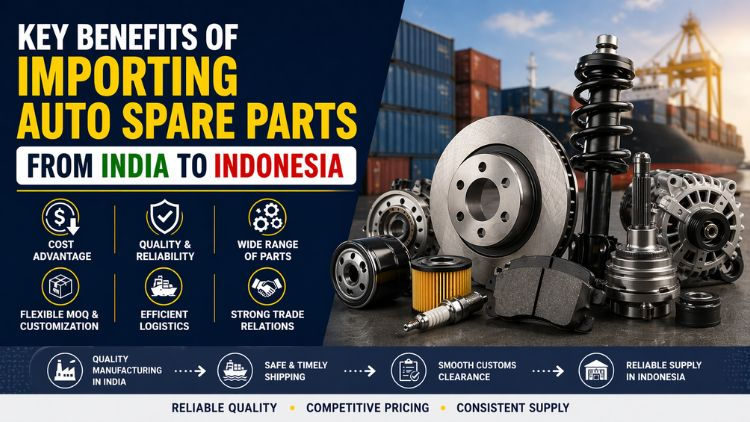
Importing automotive components from India to Indonesia offers a practical sourcing approach supported by cost-efficient manufacturing, standardized quality practices, and access to a wide range of parts. It is particularly relevant for businesses focused on passenger vehicles and two-wheelers in urban markets.
Indonesia’s automotive landscape continues to evolve, with passenger cars and two-wheelers playing a major role in daily transportation. As these vehicles remain in regular use, the demand for maintenance and replacement components stays consistent.
India is widely recognized as a global supplier of automotive components, supporting both OEM and aftermarket segments across multiple regions. For importers, this creates a reliable sourcing environment backed by export-oriented production and established trade practices.
Focused Sourcing for Passenger Vehicles and Two-Wheelers
Unlike sourcing strategies centered around heavy commercial vehicles, many importers in Indonesia focus on components used in everyday mobility.
In many urban markets like Indonesia, faster-moving passenger vehicle and two-wheeler parts often generate more consistent demand than heavy commercial vehicle components.
This typically includes:
Passenger cars used for daily commuting
Two-wheelers that dominate urban transport
Light-use vehicles requiring frequent servicing
This focus supports faster inventory movement and aligns closely with real market demand.
Cost Advantage with Practical Context
Cost advantages often come from relatively lower production expenses and efficient manufacturing ecosystems. India’s industrial base allows suppliers to operate at scale while maintaining cost control.
For importers, this can help:
Maintain competitive pricing in local markets
Manage procurement budgets more effectively
Support long-term sourcing stability
Quality and Manufacturing Standards
Consistency in quality is essential for repeat business. Many manufacturers follow ISO-aligned processes and standardized quality control practices for export markets.
Common characteristics include:
Structured production systems
Routine inspection and testing procedures
Alignment with international supply expectations
These practices help ensure that components meet practical performance requirements across different vehicle categories.
High-Demand Parts Commonly Sourced
Rather than focusing on brand-specific sourcing, many importers prioritize parts with consistent market demand.
Common categories include:
Clutch plates
Air, oil, and fuel filters
Electrical parts such as sensors and ignition coils
Two-wheeler engine kits
These components are typically replaced at regular intervals, making them consistent contributors to aftermarket demand.
Bulk Supply and Flexible Production
India’s manufacturing ecosystem supports a wide range of production requirements. Suppliers often cater to both standard and customized needs.
Typical capabilities include:
Flexible minimum order quantities depending on product type
Support for private labeling
Custom packaging options
This flexibility allows importers to adapt sourcing based on business scale and market demand.
Logistics and Delivery Considerations
Reliable logistics are essential for maintaining supply continuity. India’s export network includes major ports such as Mumbai and Chennai, which support international shipments.
In general:
Transit times generally align with standard regional sea freight schedules, depending on shipment size and routing conditions
Shipment options vary based on volume and urgency
Exporters typically handle documentation and compliance processes
This helps streamline the overall import experience.
India–Indonesia Trade Environment
Trade engagement between India and Indonesia continues to support cross-border sourcing. Established shipping routes and ongoing business interactions contribute to smoother coordination between suppliers and buyers.
This environment allows:
Easier communication with export partners
Familiarity with trade processes
Greater consistency in supply planning
Challenges and Practical Solutions
Common challenges:
Identifying reliable suppliers
Ensuring consistent product quality
Managing international coordination
Practical approaches:
Request samples before placing bulk orders
Verify certifications and production capabilities
Use third-party inspection when required
Begin with smaller trial shipments
Comparison of Sourcing Options
To better understand sourcing differences, here is a general comparison:
Factor | India | China | Thailand |
Best Fit | Aftermarket and mid-range | Large-scale production | OEM-focused supply |
Cost | Competitive | Increasing in some segments | Generally higher |
Quality | Consistent with checks | Varies by supplier | High |
MOQ | Flexible | Often higher | Limited flexibility |
Branding | Customization possible | Limited options | Less common |
Flexibility | High | Medium | Low |
Checklist Before Importing
To improve sourcing reliability, importers can follow a structured approach:
Request product samples
Confirm manufacturing certifications
Evaluate supplier experience
Use inspection services before shipment
Start with trial orders
Conclusion
Importing automotive components from India to Indonesia provides a practical sourcing approach for businesses focused on passenger vehicles and two-wheelers. With cost-efficient production, standardized quality practices, and flexible supply options, it supports consistent operations in a growing market.
If you are planning to import passenger vehicle or two-wheeler spare parts from India, you can request product details, samples, or sourcing guidance from JCBL India Auto Moto based on your market requirements.
Importing auto spare parts from India to Indonesia supports cost-efficient sourcing, consistent quality, and access to high-demand components for passenger vehicles and two-wheelers.
FAQs
1. Is it suitable to import auto spare parts from India to Indonesia? Yes, India is a well-established exporter of automotive components, and many suppliers cater to international markets with export-oriented production and quality practices.
2. Which types of automotive components are commonly imported? Commonly sourced items include brake parts, filters, clutch components, suspension systems, electrical units, and two-wheeler engine kits used in regular maintenance cycles.
3. What factors should be considered before choosing a supplier? Importers should review certifications, request product samples, evaluate production capabilities, and assess communication reliability before placing bulk orders.
4. Are minimum order quantities flexible when sourcing from India? Minimum order quantities are generally flexible and depend on the product category, supplier capabilities, and customization requirements.
5. How does shipping and delivery usually work? Transit times generally align with standard regional sea freight schedules, depending on shipment size, routing conditions, and port operations.
6. How can importers reduce risks when sourcing internationally? Risks can be mitigated by initiating trial orders, utilizing third-party inspection services, verifying supplier credentials, and maintaining open and clear communication throughout the process.
Comments